| |
 |
 |
|
| Dialogue Inter-religious |
| |
| |
|
The International Seminar Raimundo
Lúlio and the dialogue inter-religious carried out in
October of 2001 in the university of São Paulo (USP), Brazil,made
possible, among other things, the creation of this virtual space
dedicated exclusively to the study of the cultural problems related
with the dialogue among the religions. .
Inspired by the catalan philosopher's
desire Ramón Llull (c.1232 - 1316) that suggested the installation
of a Permanent Forum of Debate on the topic of the Dialogue inter-religious,
the professors Esteve Jaulent (IBFCRaimundo Lúlio) and Harvey
Hames (Ben Gurion University of the Negev, Beersheba) decided to
put to disposition of all the interested parties the up-to-date
bibliography, and to open a Forum of Debate for the exchange of
the new ideas and suggestions that where arising in the future.
In a world in globalization process,
where cultures are coming closer vertiginously, it is difficult
to understand the "other one" without understanding their
religion. Without reducing the cultures to their religious component
- because towns and nations exist with different confessions -,
it is correct to affirm that one cannot understand well a culture
when the religions are ignored in that this culture leans on.
The historical religions - not one
or other in particular, but taken togethet - are previous to the
Philosophy and they bring, each one in their way, the solution of
the deep enigmas of the human condition, responding to the questions
that during millennia the humanity presents to itself: what the
man is; which is sense of their life; the causes of the certain
and of the wrong, of the pain and of the suffering; if exists life
post-mortem; from where we come and to where we go. In sum: the
same questions that the Philosophy plans to respond.
However, only some cultures have philosophical
tradition. In them should arise necessarily certain relationship
between Philosophy and Religion, between knowledge and faith. It
is the case of the cultures that lean on in the Hinduism, in the
Judaism, in the Christianity and in Islamism. This virtual space
in fact tries to contribute for the growth of the dialogue among
them. In him they will be texts and documents that reveal the state
current of the that Dialogue Inter-religious, the relationship of
institutions and personalities that support this initiative, the
possibility to register in a List of Electronic mail, with up-to-date
informations on the course of the works, and a Forum of Debate where
you will able to formulate questions to the differents Consultants.
|
| |
|
|
| |
|
The interchange
of ideas on the Inter-religious Dialogue that here is presented
is inspired in the catalan philosopher's doctrine Ramón Llull
and can be resumed very well in the following biblical sentence:
"Say the truth each other" (Zac. 8,16). At the light of
this synthesis, instrumentalize some religion placing it in the
origin of many of the conflicts that in fact are exclusively humans,
is a sad error. To be able to say the truth, it is necessary to
philosophize; and when it is the truth on the religions, it is needed
more than ever a universal philosophize . We will discover then
truths that all can accept, being the first one of them, as very
well the Magnificent Rector demonstrated it of the University of
São Paulo, the professor Jacques Marcovitch, that the man
is "an essentially religious being."
Any effort
managed to improve the coexistence and the peace among the men must
to consist, at the same time, in a fight for the truth until get
the defeat of the falsehood. Llull affirmed that "if the falsehood
was combated with force and continually for the red truth in many
men, the truth would necessarily conquer; overalls for not having
the falsehood any help of God. And moreover, when the truth always
receives the help of the divine virtue - the Uncreated truth - that
created the truth to destroy the falsehood (The book of Gentile
and of the three wises).
This virtual
space is organized precisely even to demonstrate with facts that
the philosophy contributes for the communication among peoples of
different cultures, it liberates of prejudices and make possible
restitution to live peacefully, without losing the own identity,
and respecting the different religious traditions, parts of the
created truth.
|

To look for in this web
|
|
|
|
16-06-2011
ENCONTRO COM A TARIQAH NAQSHBANDIYAH | | 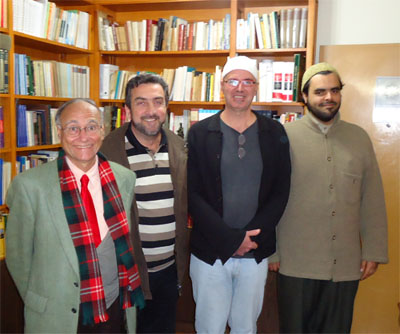
O Instituto Brasileiro de Filosofia e Ciência "Raimundo Lúlio" (Ramon Llull) e a Fundação Azziz Mahmud Hudayi da Turquia, do Sheikh Osman Nuri Topba?, organizaram este encontro, na UNESP Universidade Estadual Paulista, sobre o verdadeiro papel do Islam na vida cotidiana das pessoas, revelando ao mesmo tempo, em que consiste o sufismo (Tasawwuf) o aspecto místico da religião islâmica. Três especialistas nas práticas da Tariqah Naqshbandiyah Khalidiyah, em uma rápida visita ao Brasil, junto com o estudante brasileiro Ahmet "Víctor" Garcia, comandados pelo Sheikh Serdar Yildirim, companheiro de viagens do Sheikh Osman Nuri Topba? por mais de 50 países, discutiram os seguintes temas: O que é o sufismo no Islam tradicional?
Qual a relação entre sufismo e Islam?
A direrença entre costume e tradição.
A perfeição Interna, a adoração e o estado de Atenção na tradição sufi.
O sufismo frente a modernidade e sua perspectiva no oriente e no ocidente. |
| Mais ... |
 |
| | | 27-05-2011
CONGRESSO SOBRE A INTERCULTURALIDADE Debatendo o pensamento de Raimundo Lúlio | Primeiro Bloco Leia aqui a crônica do primeiro bloco realizado na cidade de Les Escaldes em Andorra, em maio de 2009, publicada no último número da revista Studia Lulliana, Vol. XLIX, 2009, nr. 104, da Maioricensis Schola Lullistica. Segundo Bloco Teve lugar nos dias 20 a 22 de setembro de 2010, nas instalações do Instituto Internacional de Ciências Sociais - IICS, na cidade de São Paulo, Brasil, o segundo bloco do Congresso sobre a Interculturalidade - Debatendo o pensamento de Raimundo Lúlio. Veja o programa, os congressistas, as conferências no site do Congresso. Terceiro Bloco 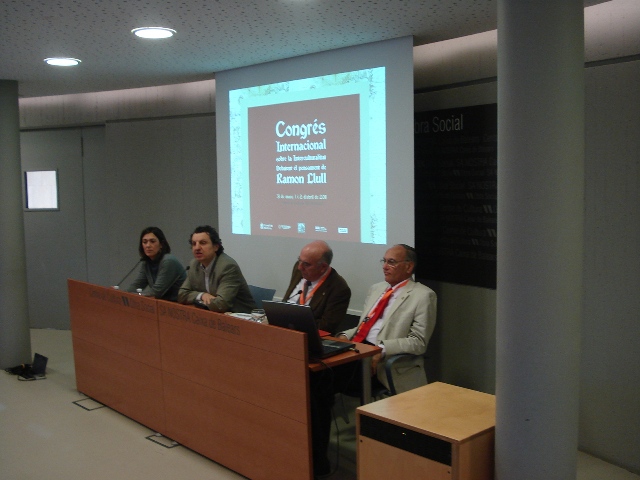
Teve lugar nos dias 31 de março a 2 de abril de 2011, nas Instalações do Centre de Cultura "Sa Nostra", na cidade de Palma de Maiorca, Espanha, o terceiro bloco do Congresso sobre a Interculturalidade - Debatendo o pensamento de Raimundo Lúlio. Veja o programa com as conferências, entrevistas com os congressistas, as notícias da imprensa e algumas fotografias no site do Congresso. |
| Mais ... |
|
| | | 27-10-2010
FOTOS E VÍDEO DO II CONGRESSO SOBRE INTERCULTURALIDADE | Organizado pelo INSTITUTO BRASILEIRO DE FILOSOFIA E CIÊNCIA "RAIMUNDO LÚLIO" (RAMON LLULL). Ocorreu nos dias 20 a 22 de setembro de 2010 nas instalações do IICS - INSTITUTO INTERNACIONAL DE CIÊNCIAS SOCIAIS, na cidade de São Paulo, Brasil. |
| Mais ... |
|
| | | 30-07-2010
CONGRESSO SOBRE A INTERCULTURALIDADE DEBATENDO O PENSAMENTO DE RAIMUNDO LÚLIO |
Primeiro Bloco Leia aqui a crônica do primeiro bloco realizado na cidade de Les Escaldes em Andorra, em maio de 2009, publicada no último número da revista Studia Lulliana, Vol. XLIX, 2009, nr. 104, da Maioricensis Schola Lullistica. Segundo Bloco 
Terá lugar nos dias 20 a 22 de setembro de 2010, nas instalações do Instituto Internacional de Ciências Sociais - IICS, na cidade de São Paulo, Brasil, o segundo bloco do Congresso sobre a Interculturalidade - Debatendo o pensamento de Raimundo Lúlio. Veja o programa, os congressistas, as conferências, o local e obtenha os formulários para inscrições e apresentações de Comunicações no site do Congresso. |
| Mais ... |
|
| | | 01-04-2010
CONGRESSO SOBRE A INTERCULTURALIDADE, DEBATENDO O PENSAMENTO DE RAIMUNDO LÚLIO | Primeiro Bloco Leia aqui a crônica do primeiro bloco realizado na cidade de Les Escaldes em Andorra, em maio de 2009, publicada no último número da revista Studia Lulliana, Vol. XLIX, 2009, nr. 104, da Maioricensis Schola Lullistica. Segundo Bloco Terá lugar nos dias 20 a 22 de setembro de 2010, nas instalações do Instituto Internacional de Ciências Sociais - IICS, na cidade de São Paulo, Brasil, o segundo bloco do Congresso sobre a Interculturalidade - Debatendo o pensamento de Raimundo Lúlio. Veja o programa, os congressistas, as conferências, o local e obtenha os formulários para inscrições e apresentações de Comunicações no site do Congresso. Terceiro Bloco Terá lugar nos dias 31 de março a 02 de abril de 2011, nas instalações do Centro de Cultura "Sa Nostra" em Palma de Maiorca. Acesse aqui o programa do terceiro bloco. |
| Mais ... |
|
| | |
|
|


